Pinterest
 Email
Email
31 Aug 2026
Yarns for workwear fabrics: characteristics and performance for technical textiles
How to choose the right yarn for workwear fabrics
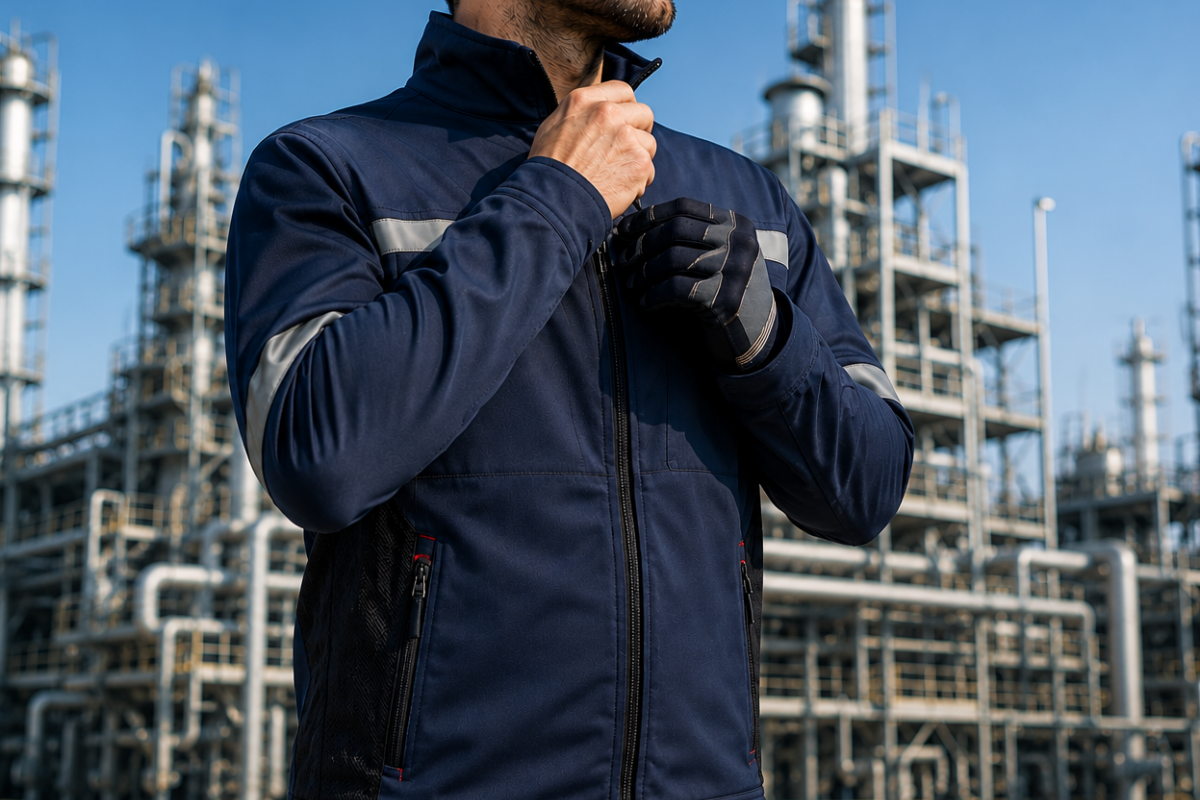
In the workwear industry, fabric performance starts with the choice of yarn. The fiber determines essential characteristics such as abrasion resistance, durability, dimensional stability, and comfort. In certain applications, mechanical requirements are also accompanied by flame retardant properties, which are essential for helping protect against flame spread.
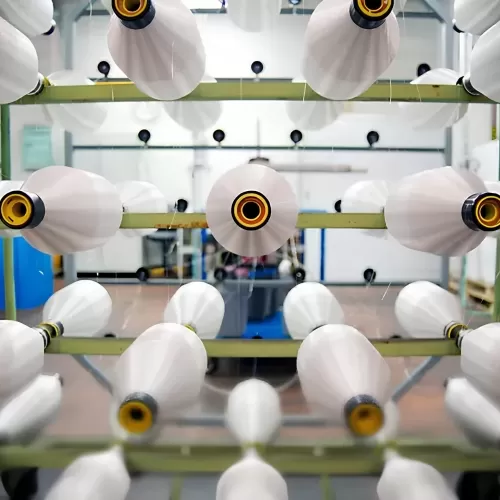
The quality of a workwear fabric therefore begins long before the garment is manufactured: the yarn influences how the fabric performs during use, how long it lasts, and how effectively it meets the requirements of different professional environments. In this article, we explore the key characteristics of yarns for workwear textiles, with a focus on high-tenacity polyamide 6.6 and the flame retardant solutions developed by Fulgar.
What characteristics should a yarn for workwear fabrics have?
Developing a workwear fabric requires a balance between durability, comfort and safety, as every application has its own specific requirements. In environments where fabrics are exposed to continuous friction, such as warehouses, construction sites, maintenance operations, or logistics, high abrasion and tear resistance are essential, along with the ability to retain their properties even after numerous wash cycles. At the same time, effective moisture management and quick-drying properties help improve comfort during long workdays, particularly in manufacturing, transportation, and industrial environments.
For certain applications, including energy, oil & gas, utilities, heavy industry, and the military, mechanical performance must be combined with an additional requirement: flame protection. In these cases, the choice of yarn becomes even more strategic, as it enables manufacturers to develop flame retardant fabric for workwear that combines protection, durability, and comfort in a single solution.
Polyamide 6.6: the foundation for durable workwear fabrics
Among the synthetic fibers most widely used in the development of workwear textiles, high-tenacity polyamide 6.6 is a leading solution thanks to its high resistance to abrasion, tearing, and wear. These characteristics make it possible to produce fabrics that maintain reliable performance even after intensive use and frequent washing, reducing garment deterioration over time.
These properties are complemented by dimensional stability, controlled elasticity, and effective moisture management, all of which contribute to wearer comfort throughout the workday. For this reason, polyamide 6.6 is widely used in the design of fabrics for industrial uniforms, logistics apparel, military uniforms, and other professional garments requiring reliability and long-lasting performance.
Flame retardant yarns: when safety and comfort must coexist
Unlike conventional yarn, flame retardant yarn is designed to help limit flame spread without compromising the performance required of a technical fabric. For manufacturers of workwear fabrics, this means developing materials that combine flame protection, comfort, and mechanical performance while maintaining low weight, processability, and durability.
It is precisely this balance between safety and performance that makes flame retardant yarns particularly suitable for technical workwear applications. When the high mechanical performance of polyamide 6.6 must be combined with increased flame protection, Q-GEO® by Fulgar comes into play.
Q-GEO® by Fulgar: flame retardant yarn for technical workwear
Made from bio-based polyamide, Q-GEO® combines abrasion resistance comparable to that of polyamide 6.6 with greater moisture regain than traditional polyamide yarns, helping improve breathability and comfort even during prolonged use. Its distinguishing feature is its flame retardant property, achieved without the use of halogenated additives.
The use of an inherently flame retardant yarn such as Q-GEO® provides an important starting point for designing fabrics intended for applications requiring protection against flame spread. Achieving the required performance, however, also depends on the construction and weight of the fabric and must be confirmed through the testing procedures established by the applicable standards.
Easy to process and compatible with major textile technologies, Q-GEO® is also certified according to OEKO-TEX® Standard 100 Class I Appendix 6 and DIN CERTCO for its bio-based content, reinforcing Fulgar's commitment to innovation, safety, and sustainability.
Are you developing a new workwear fabric or a fabric for other technical applications? Contact the Fulgar team to identify the yarn best suited to your project's performance requirements.