Pinterest
 Email
Email
04 May 2026
Bio-based materials and polyamide: innovation and sustainability in textiles
What are bio based materials and why they are central to sustainable fashion
In today’s textile landscape, bio based materials represent one of the main directions of innovation toward more responsible production models, in which industrial players like Fulgar are making concrete investments. This term refers to materials—including yarns and fabrics—obtained wholly or partially from renewable raw materials of biological origin, such as plant crops or agricultural by-products, rather than fossil-based sources. In the fashion sector, interest in bio-based materials arises from the need to reduce dependence on petroleum, limit the environmental footprint of products, and respond to a growing demand for transparency and sustainability, without sacrificing quality and performance.
From bio based polymers to next-generation fibers?
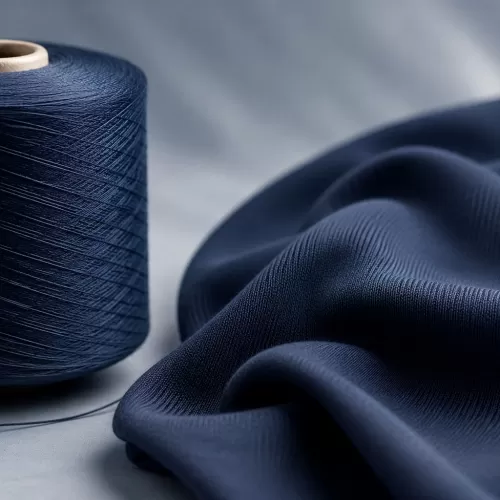
Within this context, bio based polymers come into play—namely polymeric materials obtained, wholly or partially, from renewable resources. A significant example is bio based polyamide, a synthetic fiber that maintains the typical technical performance of polyamide—strength, lightness, elasticity, and dimensional stability—while at the same time reducing environmental impact thanks to the renewable origin of the raw material. In this sense, bio-based nylon demonstrates how chemical innovation and sustainability can concretely coexist.
Technical performance and applications of bio-based fabrics
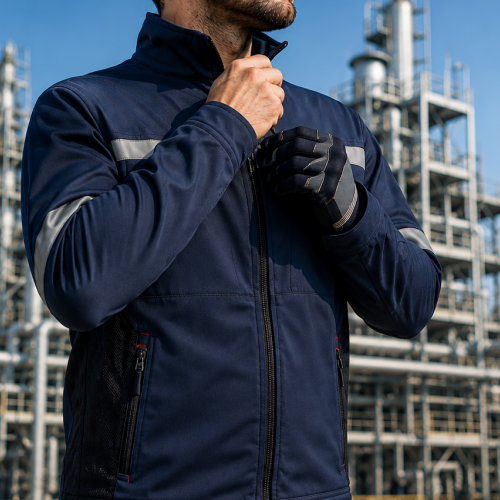
Contrary to what might be assumed, fabrics containing bio-based yarns do not represent a compromise from a technical standpoint. Modern bio-based polyamides are designed to offer high and consistent performance over time, meeting the requirements of sectors such as activewear, underwear, and functional apparel, where strength, elasticity, and dimensional stability are essential. In particular, these materials ensure comfort in contact with the skin, good moisture management, and reliability even after repeated use and washing.
At the same time, an increasingly widespread approach in sustainable fashion is the combination of synthetic and natural fibers already at the fabric design stage. The integration of different materials makes it possible to enhance the specific characteristics of each fiber: natural fibers contribute to comfort and breathability, while synthetic fibers—such as polyamide—provide strength, elasticity, and durability. This combination makes it possible to optimize the overall performance of the garment and reduce environmental impact across the lifecycle, demonstrating how sustainability can arise from conscious and balanced design choices, without sacrificing the performance required by the contemporary market.
Fulgar innovation: bio-based polyamide as a strategic driver
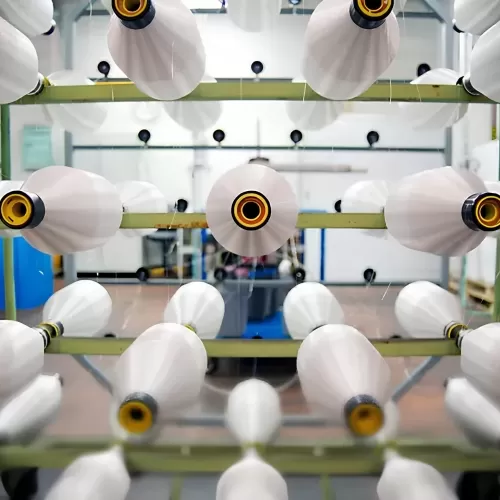
In this context of evolving bio-based materials, Fulgar leads innovation in the synthetic fiber sector with advanced solutions such as EVO®, a 100% bio-based polyamide yarn obtained from renewable plant-based sources. EVO® is produced using raw materials such as castor oil and industrial corn, renewable resources that do not require large amounts of water and do not compete with food crops. From a technical standpoint, EVO® combines bio-based origin and high performance, ensuring lightness, elasticity, breathability, fast drying and consistent comfort over time. It is a concrete example of how material research can translate into reliable, market-ready bio-based products, capable of supporting brands in the transition toward more sustainable fashion, without compromising quality, functionality, or durability.
EVO® has already been selected for numerous projects and collaborations ranging from sportswear to activewear and beachwear, confirming its application versatility. For example, in collections developed with NOSC, the yarn has been used for high-performance sports garments, where lightness, breathability, and freedom of movement are key elements. With PANGAIA, EVO® has been chosen for contemporary activewear, combining bio-based origin, comfort, and a clean aesthetic designed for everyday and dynamic use. In the case of Reformation, the yarn is applied in swimwear, a field that requires water resistance, dimensional stability, and the maintenance of performance over time. These are different examples, yet all characterized by high technical requirements and a conscious approach to material sustainability.
Environmental comparison: bio-based yarns and conventional yarns
When discussing bio-based materials, it is essential to compare them with traditional alternatives in order to understand their actual environmental impact. Analyses conducted according to the LCA (Life Cycle Assessment) methodology, in line with ISO 14040 and ISO 14044 standards, make it possible to objectively measure parameters such as CO₂ emissions and water consumption.
EVO® by Fulgar, a 100% bio-based yarn, is supported by LCA studies highlighting improved environmental performance compared to conventional alternatives, based on a comparison with the global average. The reports show a 45% reduction in CO₂ equivalent emissions compared to a textured polyamide 6.6 yarn made from virgin polymer, without any increase in water consumption.
These results are made possible by the use of renewable resources and an optimized production process designed to combine industrial efficiency with environmental responsibility.
The data demonstrates how the choice of bio-based or regenerated raw materials can translate into a concrete reduction in the environmental footprint of yarns, contributing in a measurable way to the sustainability of textile products from the very early stages of the supply chain.
Would you like to learn more about how Fulgar’s bio-based polyamide solutions can support your sustainable fashion projects? Contact our team for dedicated technical consulting.