Pinterest
 Email
Email
30 Mar 2026
Fabric elasticity and shape recovery
How yarn influences comfort, performance, and garment durability
In contemporary textiles, comfort and durability are increasingly tied to the elastic behavior of materials, particularly in high-intensity applications such as activewear. In these contexts, elasticity is not just about immediate fit, but about a garment’s ability to move with the body, provide support, and maintain its performance over time. Fabric elasticity does not depend solely on garment construction or the use of dedicated elastic fibers; rather, it primarily originates from the yarn and its structure. Understanding how stretch, resilience, and shape recovery work is essential for brands operating in sectors such as underwear, swimwear, workwear, and activewear, where fit, dimensional stability, and long-term performance are non-negotiable requirements. In this context, polyamide—particularly polyamide 6.6—plays a key role.
Fabric elasticity and fiber resilience: key concepts
When discussing fabric elasticity, it is important to distinguish between the ability to stretch under stress and the ability to quickly return to the original shape once the tension is released. This latter aspect, known as resilience, is crucial for preventing permanent deformation, localized sagging, or loss of fit over time.
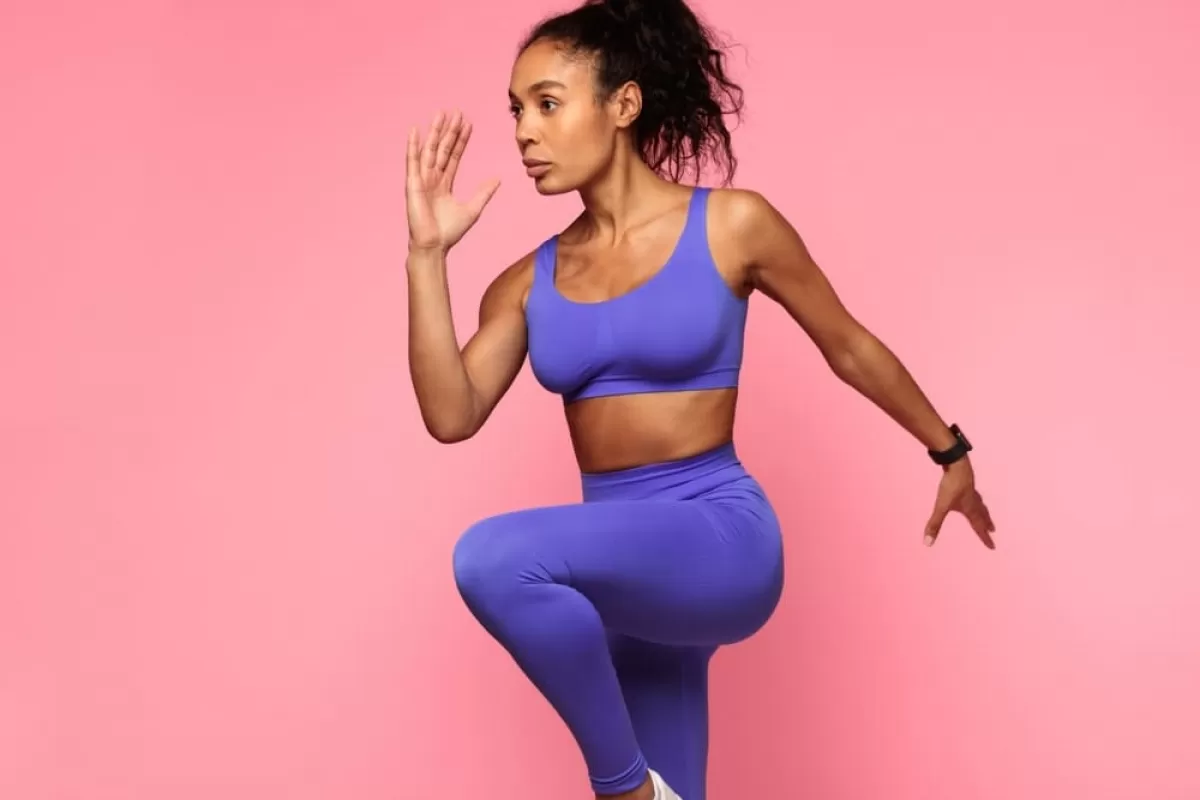
Textile fibers exhibit different elastic behaviors depending on their molecular structure. Synthetic fibers, such as polyamide, demonstrate a particularly effective balance between controlled stretch and shape recovery. This means that a polyamide fabric can adapt smoothly and naturally to body movements, while maintaining high dimensional stability even after repeated cycles of use, washing, and drying. This is especially important in activewear, where materials are continuously stressed during physical activity.
Elastic yarns, covered yarns and the role of polyamide
In technical and stretch textiles, elasticity can be achieved through different approaches. On one hand, the texturizing process of polyamide gives the yarn intrinsic elasticity: in this context, polyamide 6.6 can achieve higher levels of elasticity and recovery compared to other polyamides, thanks to its more compact and stable molecular structure.
On the other hand, elasticity can be further enhanced by covering textured nylon with elastomeric yarns. In this case, the elastic properties of both materials work in synergy, delivering improved performance in terms of stretch, support, and shape recovery. In both solutions, the yarn structure and the texturizing process play a central role in ensuring functional and controlled elasticity, adaptable to different application needs.
Polyamide, as mentioned, inherently offers a notable capacity for stretch combined with excellent elastic recovery. In stretch polyamide fabrics, this translates into comfortable, lightweight and close-fitting garments that follow the body without restriction and provide dynamic support during movement. This is a key aspect of technical activewear, where the fabric must work in synergy with the body without losing shape or functionality over time. Unlike other fibers, polyamide tends not to “relax” permanently: even after prolonged stress, the fabric recovers its original geometry, reducing the risk of structural failure.
Polyamide and long-term stability: comfort that lasts
One of the most frequently asked questions concerns polyamide’s long-term behavior: does polyamide stretch out over time? Under proper conditions of use—meaning when the fabric is designed, used, and maintained according to its intended parameters—the answer is clearly no: polyamide, particularly PA 6.6, does not exhibit permanent elongation over time. Thanks to its compact molecular structure and inherent resistance to wear, polyamide ensures high elastic stability, even in high-intensity applications such as swimwear and activewear.
In the case of polyamide 6.6, these properties are further enhanced. The fiber’s high resilience makes it possible to create fabrics that combine elasticity, support, and durability, delivering consistent comfort throughout the garment’s entire lifecycle. This is why polyamide 6.6 is widely used in garments that must support movement, fit closely to the body, and withstand mechanical stress, chemical agents, and frequent washing.
Thanks to its expertise in producing high-performance polyamide 6.6 yarns, Fulgar develops solutions designed to meet the real needs of brands operating in the activewear and functional apparel sectors. Polyamide 6.6 yarns engineered to ensure controlled elasticity, fast shape recovery, and reliable performance over time, even under intense and repeated use. This approach enables the creation of comfortable, technical, and durable garments, aligned with the expectations of today’s market.
Want to learn more about how Fulgar’s polyamide 6.6 yarns can improve the elasticity and durability of your fabrics? Contact our team for dedicated technical consulting.