Pinterest
 Email
02 Nov 2026
Fast fashion and textile materials: why we need a new approach to fibers
Fast fashion and materials: the impact of a model built on speed and volume
Fast fashion has profoundly changed the relationship between fashion and textile materials, with a model built around frequent collections, high production volumes, accessible prices, and rapid product turnover. This model has increased pressure across the supply chain and made end-of-life management an even more visible issue: in 2022, the European Union alone generated an estimated 6.94 million metric tons of textile waste, equal to 16 kg per person.
The issue is not only the amount produced, but also the speed at which garments are purchased, used and replaced. Shorter consumption cycles can increase the volume of products that quickly reach the disposal stage, intensifying the problem of fast fashion textile waste and making product durability, reuse, and material recovery even more important.
Among the materials widely used in fast fashion, synthetic fibers have gained a significant role because they combine competitive costs, versatility and performance. However, it would be overly simplistic to identify fast fashion synthetic fibers as the cause of the problem: the impact of a textile product depends on many factors, including raw material origin, manufacturing processes, durability, how the product is used and how it is managed at the end of its life. The challenges associated with fast fashion instead point to a broader issue: speed and cost reduction cannot be the only criteria used to design and select textile materials.
Beyond fast fashion: new criteria for choosing fibers and yarns
For the textile supply chain, addressing the challenges highlighted by the fast fashion model also means adopting a different approach to fiber and yarn selection. Cost, aesthetics and performance remain essential parameters, but they can be assessed alongside other factors such as raw material origin, recycled or bio-based content, traceability, durability, certifications, and the availability of data on material characteristics.
In this context, speaking broadly about sustainable textile fibers as if there were one universally better solution can be reductive. Every application has different requirements and calls for a balance between performance, durability, and documentable environmental characteristics. Durability therefore also plays an important role: a material should be evaluated not only based on the origin of its raw materials, but also on its ability to deliver the performance it was designed for over time. This is where innovative textile fibers made, for example, from recycled raw materials or renewable sources become particularly relevant, when those characteristics are verifiable and consistent with the final application.
Recycled fibers and traceability: the role of data in textile design
Responding to the challenges associated with textile waste from fast fashion also means understanding materials more thoroughly from the earliest stages of design. For brands, manufacturers, and textile developers, access to information about raw material origin, yarn technical characteristics, and recovery processes is increasingly important. Certifications and traceability systems make it possible to support design decisions with concrete, documentable information.
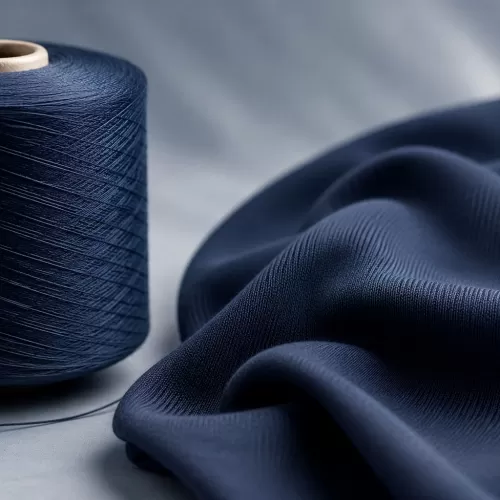
This is the direction taken by Fulgar with two polyamide 6.6 yarns that give recovered materials new value through different technologies. Q-NOVA® by Fulgar is produced through the mechanical regeneration of selected waste from the company’s production cycle. The yarn is supported by certification and traceability systems, including the Global Recycled Standard (GRS) and the ID system developed by Fulgar to verify the recycled origin of the material.
Q-CYCLE® by Fulgar follows a chemical recycling pathway: through pyrolysis, end-of-life tires are converted into oil that is used as a secondary raw material in the production of polyamide 6.6, following a mass balance approach. The recycled content attributed to the yarn is supported by certification and traceability systems, including ISCC PLUS and the Recycled Claim Standard (RCS).
These two examples show how mechanical and chemical recycling can provide different pathways for giving recovered materials new value. For brands and manufacturers, choosing a yarn therefore means considering raw material origin, recycling technology, performance, traceability, and available data according to the needs of the textile project.
Fast fashion has made the limits of a model based primarily on speed, volume, and rapid product replacement especially visible. For the textile industry, the answer does not lie in a single fiber labeled “green,” but in more comprehensive criteria for material design and selection, capable of considering quality, durability, and documentable characteristics of recycled raw materials together.